
Waste Management
Waste Management
Policy & Commitment
Banpu recognizes that waste generated from our operations, including mineral waste, may pose potential risks and impacts on the environment and human health if improperly managed. We integrate waste management into our environmental management system, applying a risk-based and lifecycle approach to ensure regulatory compliance, align with international standards, and drive continuous improvement. The Company is committed to preventing and minimizing waste generation, enhancing resource efficiency through reuse and recycling, and applying environmentally sound disposal methods, with the aims of reducing waste generation and achieving waste management targets.
Impacts, Risks & Opportunities
Impact Materiality
Improper handling of waste, especially hazardous materials and tailings, can lead to catastrophic land and water contamination, causing long-term harm to people and nature.
Financial Materiality
Mismanagement may lead to regulatory non-compliance, costly remediation, legal liabilities, operational disruptions, and a loss of social license to operate.
Management Approach
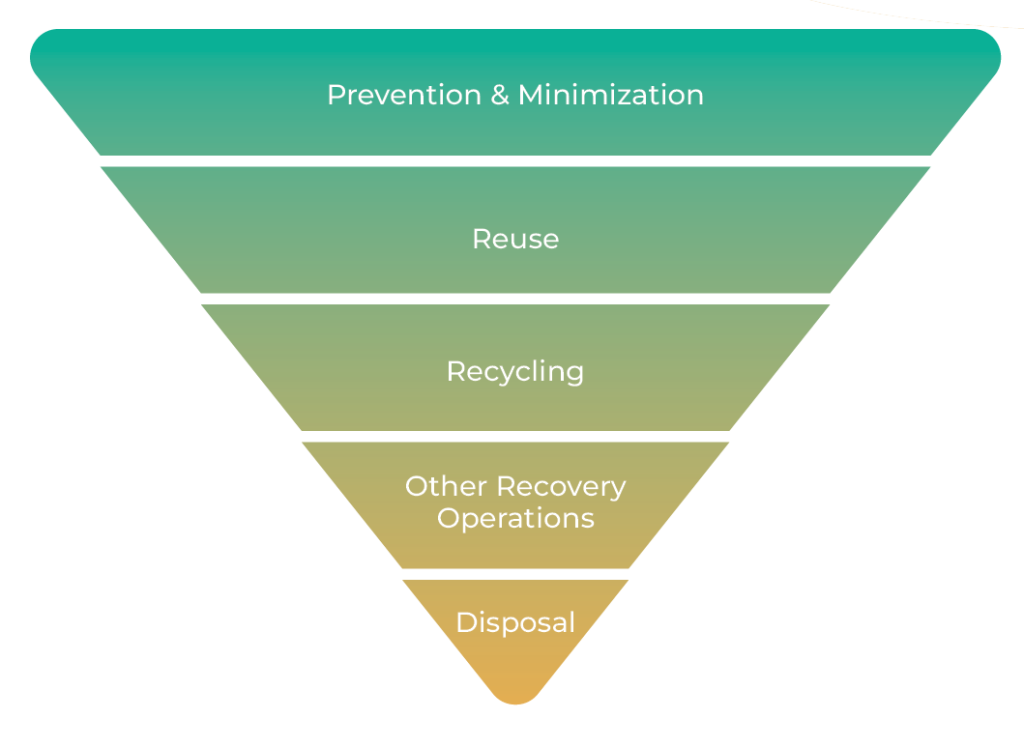
The Company strictly applies a waste management hierarchy – prevention & minimization, reuse, recycling, other recovery operations, and disposal, as a core principle across all operations. Our waste management policy and standards, developed in line with international best practices and applicable regulations, provide the foundation for implementation that focuses on maximizing resource efficiency, minimizing waste directed to disposal, and reducing environmental impacts associated with incineration and landfilling.
For externally managed waste, the Company engages only government-authorized agencies and monitors transportation and treatment processes to ensure regulatory compliance with minimal environmental impacts. Waste-stream mapping is conducted across the value chain to enhance visibility of waste generation and management, support environmental risk assessment, and inform strategic planning. Internal waste volumes are systematically measured, while externally managed waste volumes are tracked through verified third-party documentation, reinforcing data accuracy, transparency, and accountability. This comprehensive approach reinforces the Company’s commitment to sustainable waste management and environmental stewardship.
Waste management standard is structured into 5 steps, including:
Planning: Identify sources of waste and assess their hazardous characteristics. Define appropriate management methods and evaluate opportunities for waste prevention, minimization, reuse, recycling, and other recovery operations.
Storage: Ensure that waste is stored in designated, well-maintained facilities. Regular inspections are conducted to uphold safety and environmental standards.
Transportation: Implement proper waste handling protocols and maintain full traceability throughout all stages of transportation to ensure safe and lawful movement of waste materials.
Treatment & Disposal: Maximize waste reuse, recycling, and other recovery operations. When disposal is necessary, use environmentally friendly methods and appropriate technologies to minimize impact.
Monitoring, Evaluation & Reporting: Continuously monitor and assess waste management performance to ensure compliance with applicable standards.
For externally managed waste, the Company engages only government-authorized agencies to ensure compliance with the least environmental impact in waste transportation and disposal.
The Company develops the waste process flow that maps waste generation across the value chain: upstream, own operations, and downstream. This mapping identifies waste generation points and enables strategic planning to enhance circularity measures by identifying opportunities for waste prevention.
Internal waste volumes are systematically measured, while external waste volumes are recorded through third-party reports to uphold transparency and accountability. This comprehensive approach reinforces the Company’s commitment to sustainable waste management and environmental stewardship.
Business
Hazardous waste
Non-Hazardous waste
Used lubricant
Coolants
Used battery
Contaminated container
Laboratory waste
Transformer
Electronic waste
Solar panel
Organic waste
General waste
Ash
Synthetic gypsum
Mining
•
•
•
•
•
•
•
•
Thermal Power
•
•
•
•
•
•
•
•
Gas
•
•
•
•
•
•
•
•
Renewable Power
•
•
•
•
•
•
•
•
Solar Rooftop & Floating
•
•
•
•
•
•
•
•
Energy Storage System
•
•
•
•
•
•
•
•
Mineral Waste
Mineral waste generated from mining operations, including overburden, waste rock, and tailings, may pose potential risks to soil and water if not effectively managed. The Company has established and implemented a dedicated mineral waste risk assessment and management standard to prevent and minimize environmental impacts. This standard applies a lifecycle approach covering pre-mining, operational, closure, and post-closure stages.
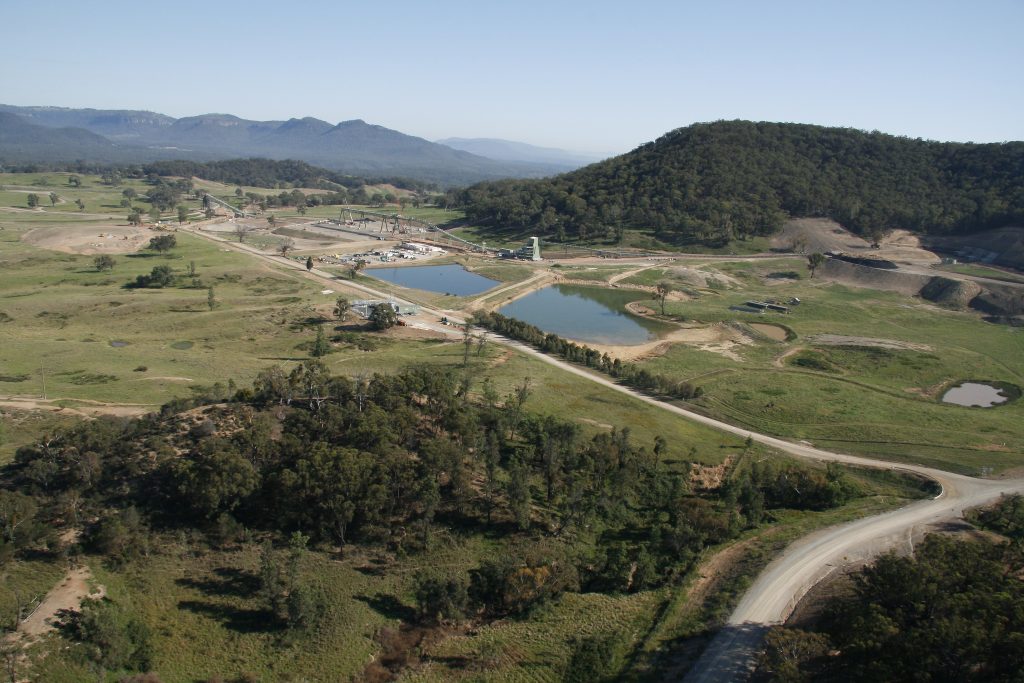
To strengthen preparedness and response capabilities, all mining operations with potential risks are required to maintain and regularly inspect or test their tailings spill and emergency response plans. Any tailings-related incidents are promptly reported, classified, and investigated in accordance with established environmental incident management protocols, with corrective and preventive actions implemented to support timely mitigation, ensure transparency, and drive continuous improvement.
Overburden
The Company integrates an overburden management plan with the mine plan for each specific mine. Since the pre-mining stage, the geological survey has been performed to determine the geochemistry of overburden and to create a geological model with aims to minimize amount of overburden removal and maximize in-pit backfilling.
Tailings
Tailings management plan is developed for each operation by applying a risk-based approach, throughout their entire life, from the location selection in pre-mining stage to the reclamation in mine closure stage. In Australia, the Reject Emplacement Area (REA) Oversight Committee has been appointed to carry out the standard and audit process. All tailings storage facilities are designed and inspected regularly by external experts, as well as the tailings management plans that are periodically reviewed especially when there are significant changes in the mining plans.
Acid Mine Drainage Management
The acid mine drainage management procedure has been developed and used as a Company’s framework with several preventive measures. The acid mine drainage is one of the key issues discussed in the mine planning review meeting to ensure its efficiency. Where acid mine water exists, water quality must be well treated prior to discharge to the environment or the mine closed.
Year in Review
In 2025, the Company established waste generation and waste management targets for the mining and thermal power businesses for 2026–2030 to drive measurable improvement and accountability. The new targets include intensity-based targets for hazardous and non-hazardous waste directed to disposal in the mining business, and absolute hazardous and non-hazardous waste directed to disposal in the thermal power business.
Operational waste improvement initiatives were implemented in collaboration with business units, including food waste management enhancement at a thermal power plant in China, as well as the 3R Waste Management Project and Waste Bank Project at an open-pit mine in Indonesia, promoting waste reduction and resource recovery. In parallel, the Company continuously conducted waste-stream mapping across all operations. In 2025, the mapping was completed for a battery energy storage system business in China and is being further developed for thermal power business in the U.S. and underground mining operations in Australia to strengthen visibility, risk assessment, and control of waste management throughout the value chain.
In 2025, the thermal power business met its overall target for waste directed to disposal. Non-hazardous waste directed to disposal increased during the year due to the first-time inclusion of sludge data from Zouping Power Plant. The mining business exceeded its target for hazardous waste directed to disposal. This increase reflects enhanced data collection practices, as waste categorization was updated to align with GRI Standards, rather than an actual rise in hazardous waste generation. Despite this, the mining business’s overall waste directed to disposal intensity continued to trend downward, driven by effective waste reduction and improvement initiatives at our open-pit mines in Indonesia.
 English
  Thai
Thai