
Air Emissions Management
Air Emissions Management


Policy & Commitment
Banpu is committed to protecting air quality as a core element of our environmental stewardship, safeguarding public health and the well-being of communities in which we operate. The Company proactively manages non-greenhouse gas air pollutants through an integrated environmental management system to ensure full regulatory compliance while minimizing potential environmental and health impacts. Going beyond legal requirements, Banpu sets quantitative air emission reduction targets that drive continuous improvement in operational performance. These targets are aligned with international standards and global sustainability frameworks, and are embedded within risk mitigations and long-term value creation for all stakeholders.
Impacts, Risks & Opportunities
Financial Materiality
Inadequate air emissions controls may trigger penalties, operational disruptions, community opposition, litigation, and reputational damage.
Impact Materiality
Uncontrolled air emissions can cause significant public health problems, including respiratory illnesses in nearby communities, and contribute to acid rain and local environmental damage.
Management Approach
Banpu prioritizes pollution prevention and control at source across all operations through a risk-based and technology-driven approach. The Company has established a systematic process for identifying significant air emissions, drawing on regulatory requirements and international standards such as International Finance Corporation (IFC) guidelines. This process determines which pollutants are material to each operation, evaluates their potential impacts, and underpins effective air emissions management and regulatory compliance.
Management measures are tailored to the characteristics of each business. In open-pit mining, Banpu applies preventive maintenance of equipment and vehicles, optimized haulage planning, and systematic dust suppression. In underground mining, site-specific air quality management plans are implemented and supported by real-time dust monitoring system. Independent ambient air quality monitoring is conducted regularly across mining areas and surrounding communities.
In thermal power business, the Company applies best-available engineering controls, with continuous emissions monitoring systems installed at stacks to ensure emissions remain within regulatory limits. In gas business, emissions are managed beyond legal requirements, with strict monitoring of hazardous air pollutants to maintain environmental compliance. For battery energy storage system business, emissions are monitored against key parameters with third-party verification.
Year in Review
During 2025, the Company recorded one significant non-compliance case involving the delayed notification of an emissions event that occurred in 2022. The incident was reported to the regulator beyond the required 24-hour reporting timeframe, leading to a regulatory enforcement process initiated in 2023 and concluded in 2025 with a monetary fine of USD 11,438. The incident caused no harm to the environment. Following the case, corrective actions were taken to strengthen incident escalation and regulatory reporting controls to prevent recurrence.
In 2025, the Company reviewed the significant air emission parameters across all business units. As a result, PM2.5 and carbon monoxide (CO) were added as new reporting parameters, while ammonia (NH₃) was removed, and total non-methane hydrocarbons (TNMHC) will be reported under the volatile organic compounds (VOCs). In addition, the Company established air emissions targets for 2026–2030. The new targets include intensity-based targets for sulfur oxides (SOX) in the mining and thermal power businesses, as well as nitrogen oxides (NOX), total suspended particulate (TSP), and mercury in thermal power businesses.
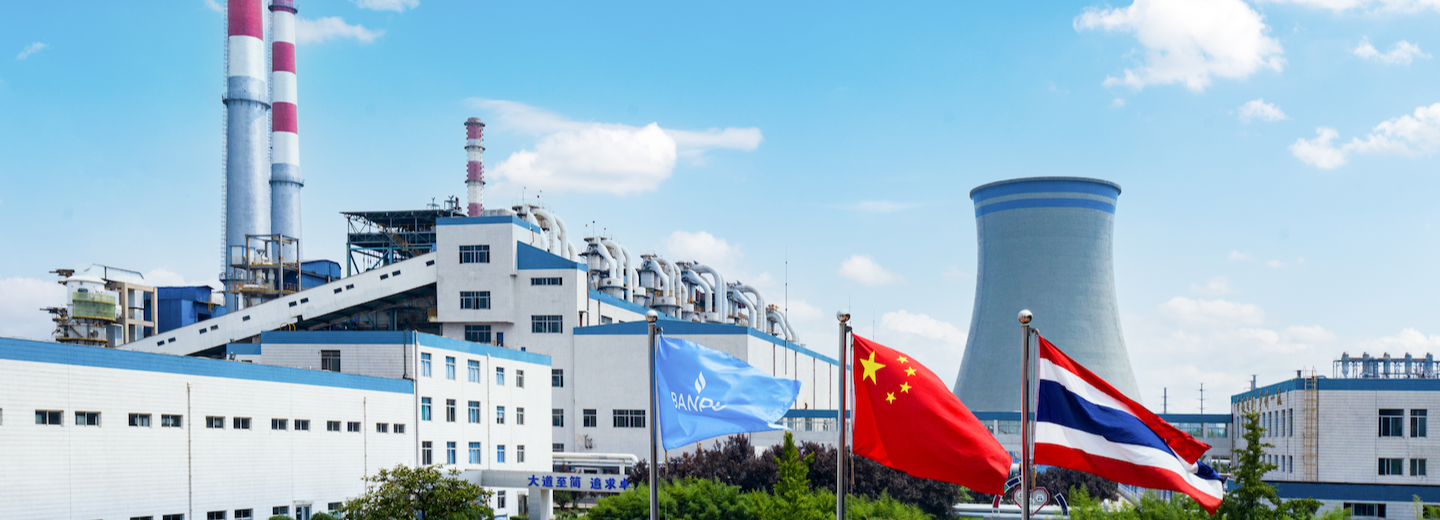
Strategic progress was reinforced by site-level action. At Zouping Power Plant in China, the deployment of advanced algorithms optimized operational processes and reduced air emissions. At Indominco Mine in Indonesia, a real-time air quality monitoring system was commissioned to strengthen oversight.
Through ongoing monitoring and continuous improvement, the Company maintained air emissions intensity at a stable and consistently low level, fully aligned with regulatory requirements. In addition to tracking key pollutants such as SOX, NOX, and TSP, the Company also monitors other significant parameters prescribed under local regulations, such as hazardous air pollutants (HAPs), to ensure compliance and minimal environmental impact.
 English
  Thai
Thai