
Community Relations
Community Relations
Policy & Commitment
Banpu is committed to responsible and inclusive community development across all areas of operations. Guided by the Community Engagement Policy, we engage transparently with local communities, Indigenous Peoples, vulnerable groups, government agencies, and other key stakeholders to enhance quality of life and strengthen long-term self-reliance. Our participatory approach respects community rights, ensures meaningful involvement, and provides accessible and effective grievance mechanisms. We create shared value through local employment, local procurement, workforce training, and quality-of-life initiatives. All business units apply consistent standards aligned with local regulations and the UN SDGs, incorporating SROI-based impact assessments.
Management Approach
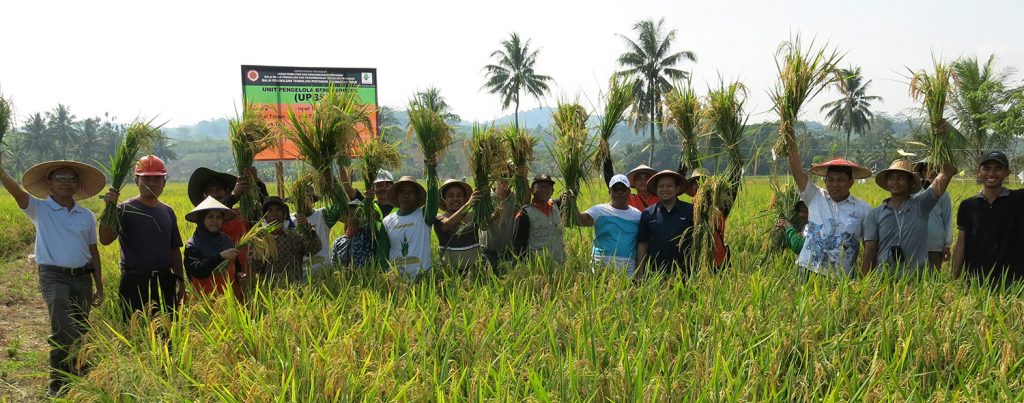
The Company has established the Community Engagement Policy and related standard practices to ensure consistent compliance and implementation across all business units. We develop strategies and set targets for community engagement activities in alignment with local regulations and international frameworks, including the UN SDGs. In collaboration with local communities, engagement activities are carried out across 6 key areas:
1. Economic development
2. Education development
3. Health and sanitation development
4. Environmental conservation
5. Social and cultural promotion
6. Basic infrastructure development
The Company prioritizes community engagement throughout every stage of operation – pre-operation, operation, and post-operation, emphasizing the involvement of community members in the design, implementation, monitoring, review, and evaluation of initiatives. For example, we develop community engagement plans that align with community needs and complement government development initiatives.
To strengthen local participation, the Company and local communities have jointly established Community Consultative Committees (CCCs), comprising representatives from local communities, local government, and the Company. These committees collaborate on project planning, progress monitoring, and issue resolution for the greatest benefit to society.
Certain operations may have significant actual or potential impacts on local communities due to their scale or proximity. The Company identifies these impacts through baseline studies, Environmental and Social Impact Assessments (ESIAs), and ongoing monitoring. For operations with significant impacts, Banpu implements specific mitigation plans addressing issues such as land use, resettlement, livelihoods, cultural heritage, access to resources, and community safety. These measures are developed in consultation with affected communities and are monitored through CCC meetings and independent assessments. In the event of significant changes during project implementation, the ESIA will be reassessed and updated accordingly to ensure that mitigation measures remain appropriate and responsive to evolving conditions.
All community programs are regularly monitored and evaluated through CCC review meetings and community perception surveys to assess community perception, acceptance levels, concerns, and recommendations. The insights from these surveys are used to improve operations, ensuring they better serve community needs and enhance overall satisfaction. In Indonesia, an annual community satisfaction survey is conducted specifically on community engagement programs. The results provide valuable feedback and support the continuous improvement of community development initiatives. To maximize effectiveness, the Company applies the SROI framework to evaluate the social impacts of community development activities and enhance operational efficiency.
Scope of Community Engagement Implementation
The Company annually reviews the applicability of community engagement across the Group, taking into account the extent of operational control, the nature of activities, and potential risks or impacts on communities. In 2025, 27 business units met the criteria and implemented community engagement management accordingly. The remaining business units fell outside the scope of community engagement implementation, either because they are not under the Company’s operational control or are located within industrial estates, where operations do not involve direct interaction with local communities or significant community related impacts. This approach reflects the application of community engagement based on materiality and the appropriateness of the operational context.
Social Baseline Study
The Company collects baseline community data during the initial stages of operations and updates it regularly to understand community geography, demographics, occupations, resources, living conditions, and development potential. These insights are subsequently presented to the CCC, which includes representatives from Indigenous Peoples and vulnerable groups to ensure comprehensive perspectives and promote inclusivity and equity. Through dialogue and collaboration, the Company develops tailored community engagement plans that reflect community needs and foster mutual benefits.
Partnerships with Contractors on Community Capacity Building
The Company collaborates with local contractors to support community engagement initiatives, many of which are actively implementing community development activities. This collaboration encompasses joint planning, budget allocation, resource management, and knowledge sharing. Through these partnerships, the Company and contractors enhance the efficiency of community engagement projects, expand benefits to local communities, and reduce redundancies in program management.
Community Grievance Management
The Company has established a Community Complaint Management Standard to ensure systematic and consistent handling of community complaints across all business units. This framework includes Indigenous Peoples management and the community restoration processes aligned with the resettlement management framework. Moreover, complaint management outcomes are reported regularly to the management-level Sustainability Committee and the Board-level ESG Committee to ensure governance oversight and accountability.

Year in Review
In 2025, the Company strengthened community engagement across our operations, holding 10 Community Consultative Committee (CCC) meetings in Indonesia, 17 mining group-level subcommittee meetings in Australia, 5 meetings with community representatives in Mongolia, and 80 community consultation meetings in the U.S. Meanwhile, 3 significant community complaints were recorded in Thailand during the year, all of which were fully resolved and reported to the appropriate committees in accordance with our governance process.
To strengthen the effectiveness of community development initiatives, the Company continues to conduct annual community satisfaction surveys. Community Satisfaction Index (CSI) assessments were carried out across 3 business units in Indonesia in 2025, resulting in an overall satisfaction level of 88% (“Satisfied”). In addition, the Social Return on Investment (SROI) framework was applied to 7 community development projects in Indonesia to evaluate and strengthen their social impact on local communities.
To ensure a comprehensive understanding of potential social impacts from our business operations, Social Impact Assessments (SIA) are conducted across all business units from the beginning of each project. These assessments are revisited whenever there is a significant change to an approved project to ensure that impacts on local communities are minimized. The approach enables the Company to effectively adapt to changes and maintain strong stakeholder engagement. In 2025, SIA coverage reached 100% for designated sites with required community engagement and impact assessment.
 English
  Thai
Thai